CES 2026: Intel's Making A Strong Push In the Mobile Computing Space
January 8, 2026
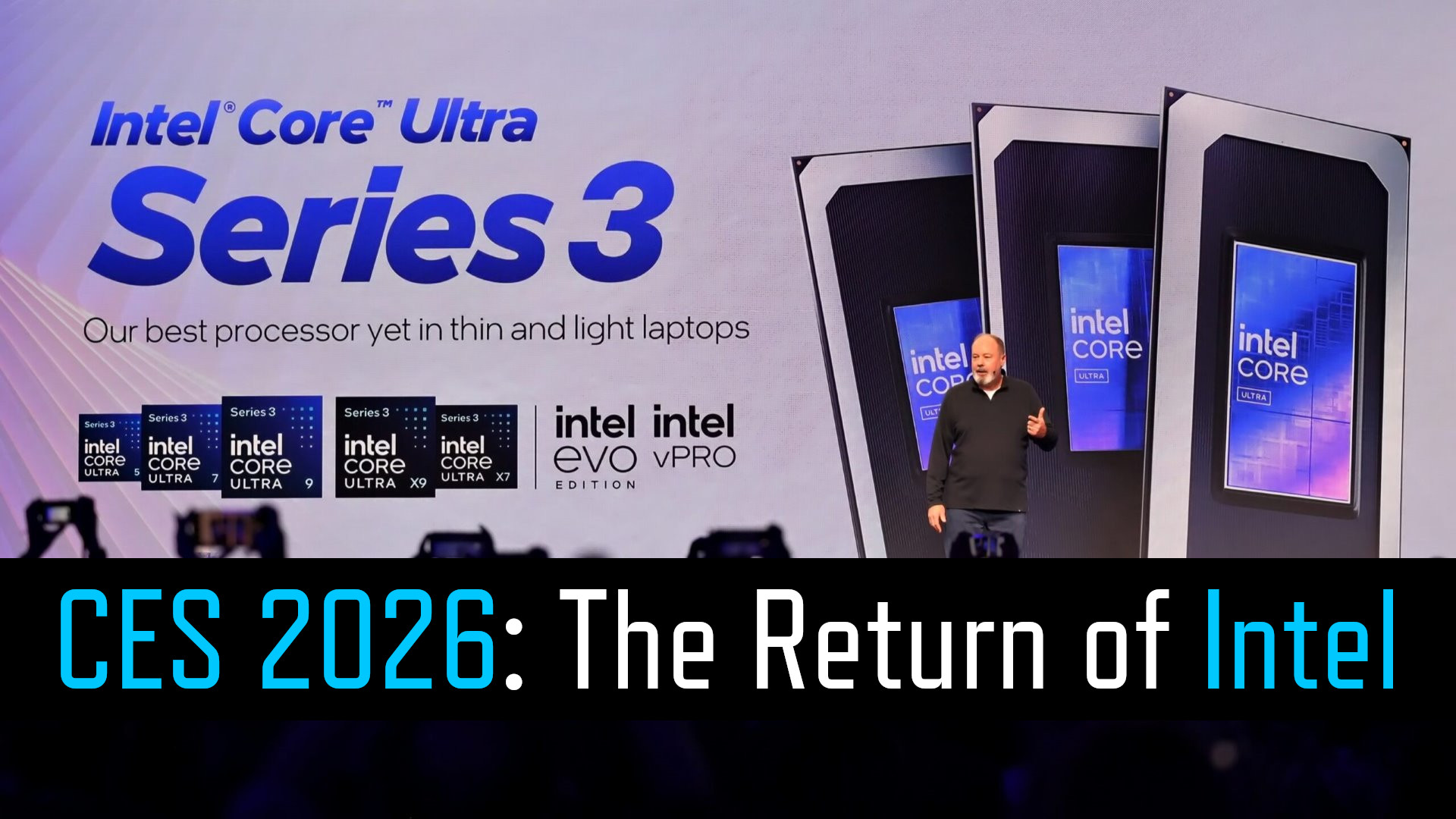
2026 could be a breakout year for Intel, and based on their CES keynote event, they’re absolutely ready to deliver. Intel’s Core Ultra Series 3 processors are quite the big deal, and what those processors really mean for the future is beyond exciting.
AI is an unavoidable talking point there, of course, and Intel has definitely made substantial improvements in that area over their last-gen processors, but what will really matter to most consumers is just how much more powerful and efficient these Ultra Series 3 processors are. Both powerful and efficient enough that Intel can make a very strong case for itself across different industries, especially in gaming.
Intel’s Ultra Series 3 Mobile Processors Mark A Significant Leap Ahead
Before getting into the impressive performance numbers, the Intel Core Ultra Series 3 processors are significant even for their innovative semiconductor process alone. The processors are the first compute platform built on Intel 18A process technology, which is especially important for Intel as that’s designed, developed, and manufactured all within the United States. This is a big boon for Intel, as it maximizes their profit margins. Outsourcing less and actually making full use of their fabrication sites will be better for Intel in the long term.
When it comes to the production of leading-edge nodes, Intel has been behind the ball for a good while. Now, Intel’s 18A process nodes look set to outperform even TSMC’s new equivalent, the N2. Still, Intel has a lot to prove, as companies like NVIDIA haven’t quite bought into the 18A process just yet. Intel’s Series 3 mobile processors have the ability to leave a very strong impression. Winning the consumer and industrial market over is an almost necessary step for Intel in 2026.
The Ultra Series 3 processors promise improved power efficiency, more CPU performance, better integrated graphics, and more AI compute. These are all expected qualities out of a new processor generation, but Intel is making a more significant leap ahead here with these new Panther Lake CPUs. Compared to Lunar Lake, Series 3 processors offer up to 60% better multithread performance and up to 77% better gaming performance. A standard use case like streaming 4K video will also only consume about one-third of the power compared to before, so we’re really talking about a dual threat here.

Integrated Graphics Have Never Been More Convincing At This Power Level
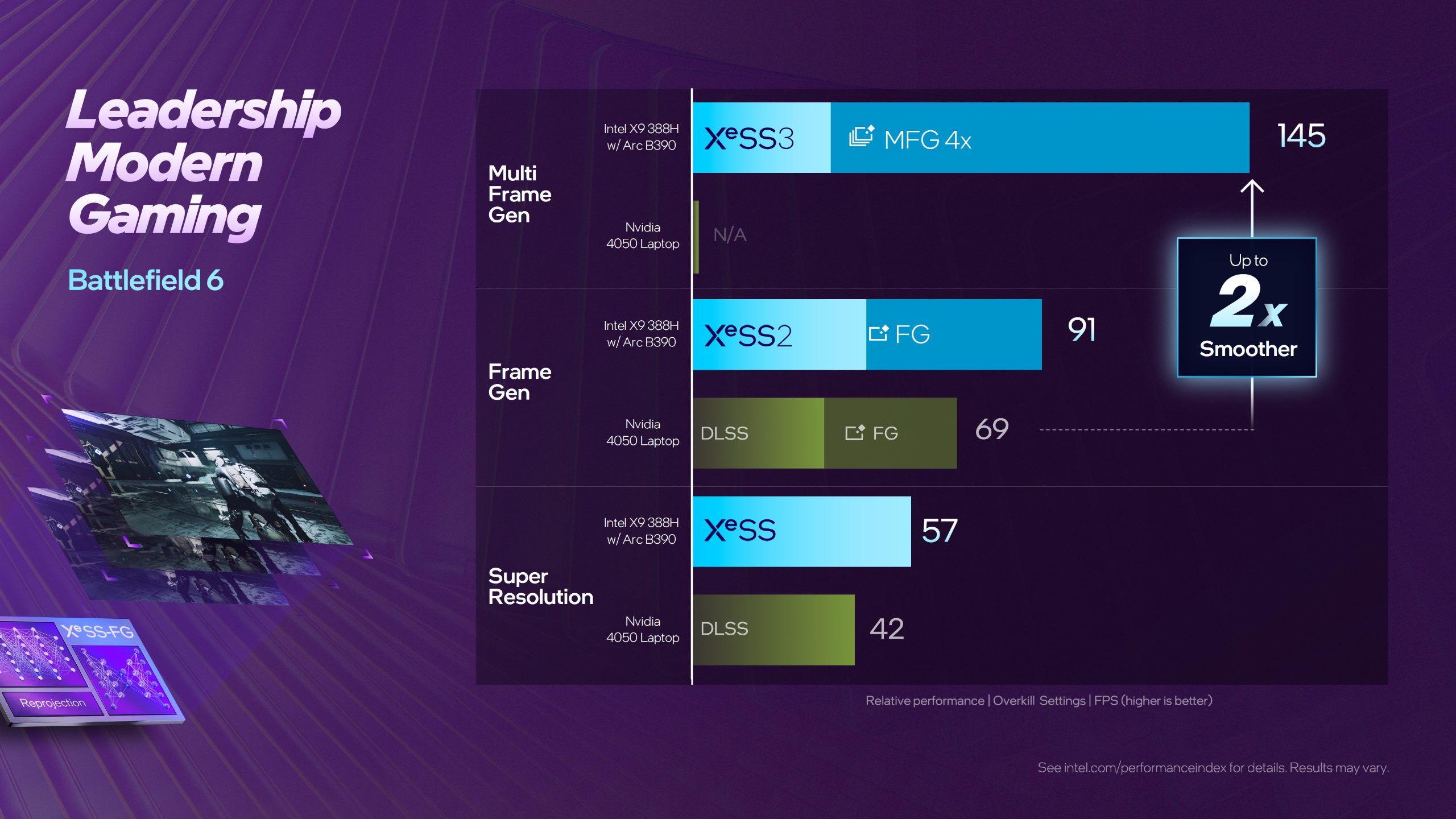
Intel’s Ultra Series 3 mobile processors are pushing the boundaries of what integrated graphics can do for portable devices at a reasonable price range. Performance-wise, AMD Strix Halo APUs may still have Intel beat, but the Panther Lake processors offer much better value for their cost. And while these Panther Lake iGPUs are still no match for NVIDIA’s top-of-the-line discrete graphics cards, the fact that Intel can legitimately compare its best mobile processor to an RTX 4050 mobile GPU is beyond impressive.
To address the gaming improvements specifically, it is important to clarify that Intel’s charts are painting a very idealistic image. The tests that the company performed involved a system with the Intel Core Ultra X9 388H and 32GB of LPDDR5 9600 memory, which will likely represent a very small fraction of devices available on the market. Even so, slightly worse frame rate numbers won’t change the fact that Intel’s newest mobile processors are changing the gaming landscape for the better.
Intel lightly covered this during their event, but XeSS 3 will be a huge advantage for these processors. Multi frame generation is an incredibly viable solution for guaranteeing a smooth gaming experience across a user’s full library of games. Frame gen’s fake frames do create problems of their own, but Intel really believes that they have addressed the latency issues in a substantive way. More natural-feeling camera movement has been the main area of focus for Intel. Unfortunately, there’s no real way to verify any improvements there without an in-person test.
Intel Arc Graphics Will Power Many New Devices
While Intel has specifically advertised the performance numbers of the Intel Core Ultra X9 388H, it is not the only Panther Lake processor with Intel Arc Graphics. Intel’s Ultra Series 3 lineup actually has four different processors of that sort, three of them with the Intel Arc B390 and one of them with the Intel Arc B370. It’ll be interesting to see how those chips all compare, especially the ones with the B390, as the difference between them seems to solely be in their CPU clock speeds.
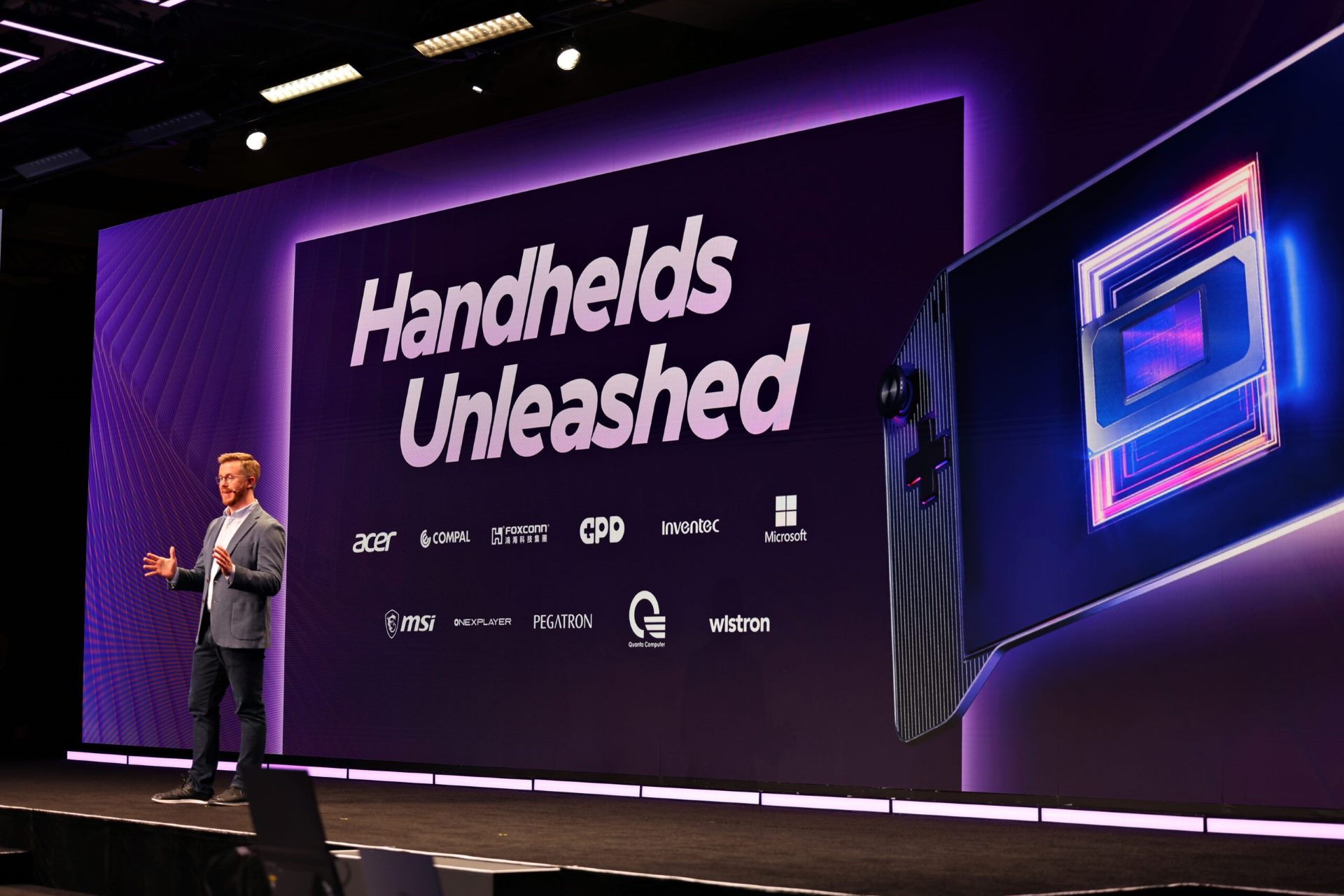
At their CES event, Intel also explicitly confirmed that they would be working on a dedicated handheld gaming platform. There’s an expectation in the industry that said platform will be built with a custom processor. Instead of cutting down on the power, it actually sounds like Intel will aim to maximize the gaming performance of their custom Panther Lake chip. A 12 Xe-core iGPU can absolutely be expected, which is very exciting to think about. Intel’s desire to actually show up for their consumer audience is genuinely refreshing to see.